 |
|
|
|
|
|
|
|
|
|
|
|
|
|
|
|
|
|
|
|
|
|
|
|
|
|
|
|
|
|
|
 |
|
|
|
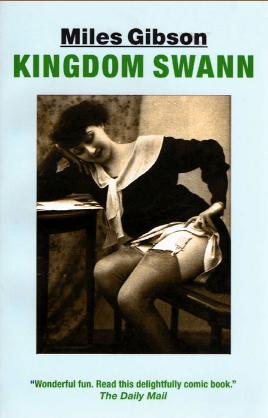





Yet, despite these beneficent talents, he was powerless against photography. In the camera craze that followed the Great Exhibition he saw the portrait business collapse. For several years he scratched a living by colouring photographs for the camera studios that flourished the length of Regent Street. He submitted landscapes to summer shows and waited for fashions to change. But the great days were gone. When he married a dentist’s daughter in 1873 he had already burned his brushes and bought a brass and mahogany camera.
The studio, with its tall north window, was perfect for this new enterprise and Swann was quick with the modern art. Photography, he discovered, was a marvel of simple arithmetic. A tiny carte-de-visite portrait could be sold for a florin or five shillings for the imperial dozen. He manufactured them by the thousand and there seemed no end to the public’s demand for these gloomy paper shadows.
It wasn’t long before he hired a redundant engraver to help him develop and print his work. The engraver’s name was Cromwell Marsh. He was a young man with a freckled face and a slick of ginger hair. He was patient and clever and full of crafty ambition. He brought new ideas to the business and quickly doubled their fortunes.
For trifling extra expense, and the hire of a suitable costume, clients could take advantage of exotic painted backcloths and amusing trompe-l’œil effects. Ladies might dress as the Empress of China or sit and swing in a paper moon. The men could captain a submarine or wave their hats from a canvas balloon. These scenes would be cleverly coloured and framed in gilt for a guinea.
When his wife died in the Great Frost of 1895, Kingdom Swann was a wealthy man. He should have retired and spent his few remaining years slumped by the fire with his dreams. At the ripe old age of seventy he was ready to retreat from the world. But the world hadn’t finished with Kingdom Swann.
He was born in 1825 and trained, at an early age, to be a classical painter. He was accepted as a pupil of the most celebrated artist of the day, Hippolyte Fletcher-Whitby, at his studio in St John’s Wood.
The old master was famous for his huge, allegorical paintings featuring tribes of nimble nudes. These canvases were so large that scaffolding had to be built around them during their execution. Each morning Fletcher-Whitby would send his pupils scrambling up the rigging to work among the gods where, balanced on treacherous planks, they rendered thunder clouds by the yard or drew the smoking peaks of Sodom. The old man, nearly blind and crippled with gout, remained on the ground to gild the folds of Salome’s skirt or fiddle with a slave-girl’s buttocks.
‘Don’t spare the pigment!’ he would roar as his students daubed at the sky. 'Give me more thunder!’
The young Swann was quickly promoted down the ladder, from backgrounds to foregrounds, and finally given command of the concubines at The Persians Feast in Babylon.
By the time of the grand master’s death in 1849, Swann had already rented a studio in Piccadilly and settled down to the serious business of making money. He saw no future in Whitby’s painted hippodromes and turned his attention, instead, to picking pockets by painting portraits. For a few guineas he lent chemists, clerics and city drapers all the majesty of Roman generals. He turned their wives into seraphim and pictured their children as cherubs. At the flick of his wrist he could turn grocers into gladiators and matrons into dimpled moppets.
- 2 -
2
3